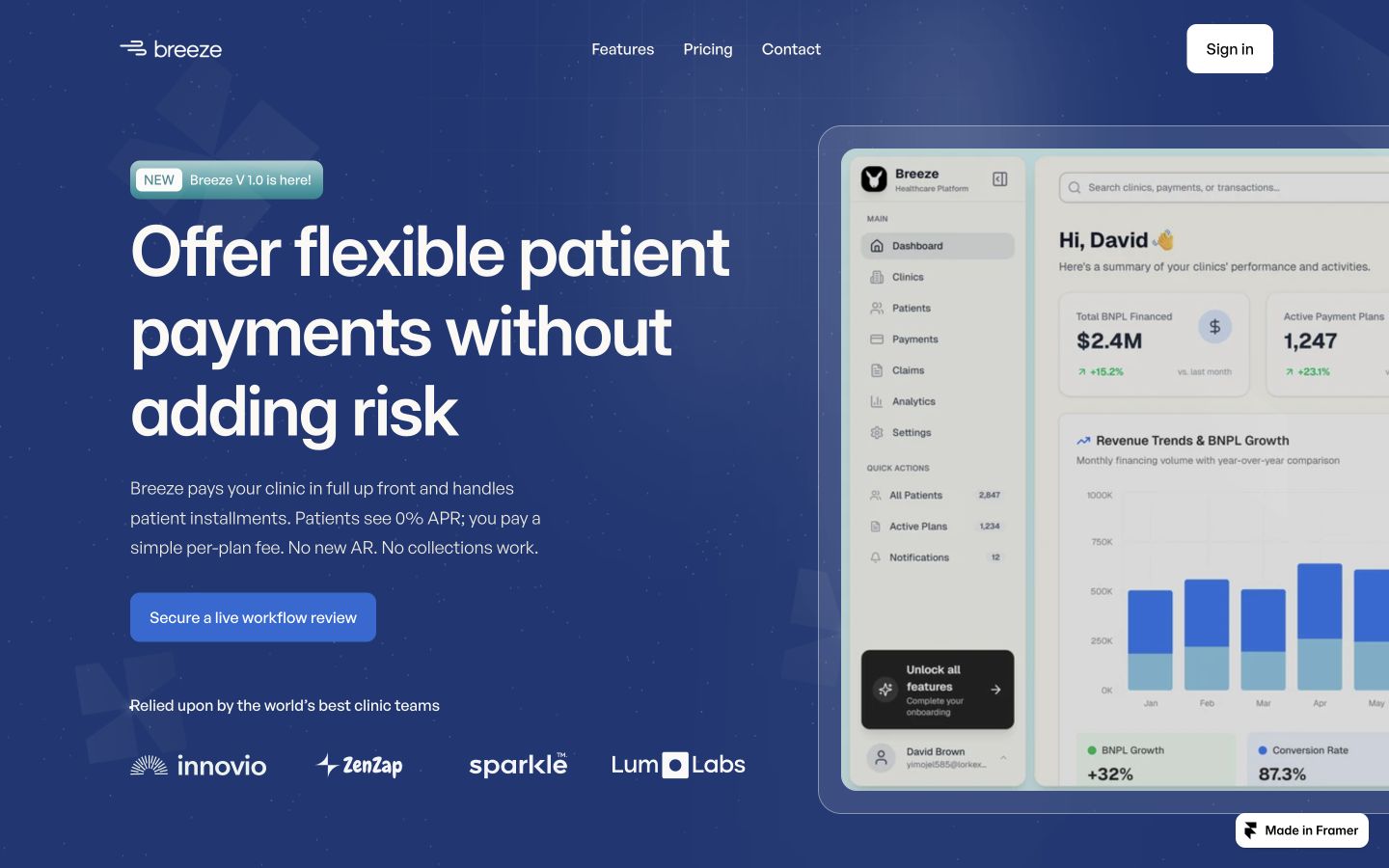
Breeze
Healthcare payments · product direction, design and developmentFrom patient intake to repayment, with a clear view of what needs attention.
- Role
- Product direction, interface design and prototype development · client work
Payment plans create ongoing work
A plan is easy to describe as an amount split into installments. For a clinic team, it is an ongoing job: connect it to the right patient and treatment, keep track of what is due, and handle the cases that stop progressing. I shaped Breeze around that work, with patient context and repayment visibility as the starting point.
My contribution
This was client work. I shaped the product direction, designed the interfaces and built the prototype, alongside the public website. The scope covered clinic oversight, patient intake, payment-plan management and the supporting claims and reporting views.
Organize around the staff’s next decision
The structure moves from the clinic network to individual patient and payment work. Clinic cards provide a quick overview; detail views expose contact, performance and operating information. Patient and payment queues support the daily work, while schedules, history and activity sit inside each record.
The operational workflow
- Establish the patient, clinic and treatment context
- Define the payment amount and repayment terms
- Track progress, balance and the next payment
- Review the exceptions and choose a follow-up
Three decisions that shaped the product
Separate the patient from the payment plan
A patient’s treatment stage and a plan’s repayment status answer different questions. I gave them distinct views: patients are grouped into in treatment, repaying and delinquent; plans are tracked as active, completed or overdue. The clinic and patient remain visible in both, so the financial work keeps its context.
Make the queue useful before opening a record
The patient view brings the next payment, priority, progress and remaining balance into one row. Filters narrow the work by status, risk, clinic and payment date. The plan view adds installment progress and status-specific actions. The aim was to help staff find the work that needs attention before reading a complete record.
Break intake into reviewable steps
Patient creation is divided into identity, contact, plan and review. Treatment and clinic establish the context; plan amount, deposit, monthly amount and first payment date establish the repayment terms. Separating these steps gives staff a smaller set of decisions at a time, with a review stage before creating the record.
Overview first, detail when it matters
Inside a patient record, overview, plan, payments, activity, notes and documents are separate layers. A payment record has its own overview, schedule and transaction history. This keeps the queue compact without asking it to carry every detail, and gives staff a place to investigate before taking an action.
Claims need their own workflow
An insurance claim has a different lifecycle from a patient payment plan. I kept it in a separate workspace, with pending, paid, denied and rejected groups. Payer, amount, aging and update information support triage; creation moves through patient, coverage, services, documents and review. The shared structure keeps the interface familiar while respecting the different work.
Connect the product to the promise
The public website explains patient payment options and the clinic’s role in managing them. I designed and built it in Framer, pairing the offer with product imagery and a step-by-step payment journey. The website introduces the service; the application gives that explanation an operational shape.
What the work delivered
A product prototype and public website that make the clinic payment workflow tangible. The prototype defines the views, states and interactions; it does not establish live payment processing or validated business results. The next step is to test the core staff tasks and confirm the repayment rules before connecting the financial infrastructure.